
04 Mariestad - Lidköping, Vänerleden
67.7 km
 To do
To do Attraction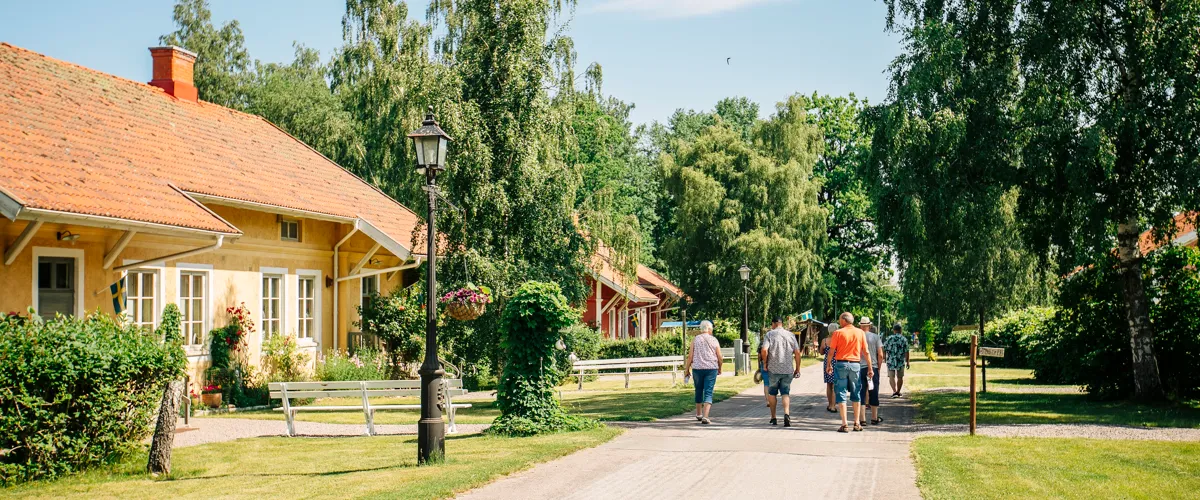
Kinnekulle A Scenic and Historic Industrial Heritage Setting in Hällekis
The old industrial village is home to seven craft shops, two pop-up stores, and a gallery that hosts art exhibitions during the summer. Visitors have the opportunity to meet the artisans themselves, who are happy to present their work and often demonstrate their crafts throughout the season.
Falkängen Craft Village consists of eight houses dating back to the turn of the 20th century. These buildings were originally constructed as workers’ housing for employees of the local cement factory. All of the houses have been carefully restored, and the former apartments facing the street now accommodate several craft collectives. Artisans from across Sweden rent the premises, exhibit their creations, and sell their work throughout the summer. In some of the collectives, traditional craft production is still actively practiced.
Seasonal opening hours:May 1 – August 31, 10:00 AM–6:00 PM daily.Also open during the annual Autumn Tour (Höstrundan) and Winter Street (Vintergatan) events.
Falkängen offers a cozy café with a large outdoor seating area, as well as charming accommodation with more than 50 beds, an event venue, and two conference rooms.
The village also features:
The unique atmosphere of Falkängen combines traditional craftsmanship, historic architecture, and careful preservation of cultural heritage.
Around the year 1800, a cooper (barrel maker) named Johan Olsson-Falk lived at Hönsäter Alum Works. Born in 1769, he married in 1800 and had ten children, although five did not survive to adulthood. In addition to his work at the alum works, he kept a cow to help support his family. The cow grazed in a wooded meadow below Hönsäter, which may be the origin of the name Falkängen.
In 1873, the alum works closed and was replaced by a lime works, which retained many of the workers. When the cement factory was established in 1892, the workforce transferred there as well. The factory required a large number of employees, so workers’ housing was built at Falkängen in Hällekis.
The first three houses were constructed between 1896 and 1898 by a builder from Skara. The construction cost was 9,000 SEK, while roofing tiles, bricks, slate, and lime were supplied by the cement factory. The first families moved into the houses in 1899. In total, eight houses were built.
Foremen received a one-room-and-kitchen apartment free of charge as part of their salary, while workers paid 28 SEK per year for the same accommodation.
By the early 1980s, the houses at Falkängen had fallen into disrepair. The municipality attempted to sell them for one Swedish krona each, but without success. Demolition seemed imminent until then-Governor Frithiofson intervened and secured government funding for restoration work. Over time, all the houses were renovated.
A hostel has operated at Falkängen since 1990. The municipality managed the facility until 2001, after which it was leased to private operators. In 2022, the municipality sold the buildings to new owners, who continue to run the site in the same spirit and tradition.
Use the travel-planning service sistamilenbilen.se to find the best combination of bus, train, and the “Last Mile Car” service in Lidköping, Götene, Skara, and Vara—a convenient and affordable way to reach your destination.
Take a Västtåg train to Hällekis Station. From there, Falkängen is just a short walk away. Journey planning is available through the Västtrafik To Go app or on the Västtrafik website.
Närtrafik picks you up from any address within designated rural service areas and transports you to a stop within the municipality, or vice versa.
If buses or trains do not take you all the way to your destination, you can book the Last Mile Car, a shared taxi service that operates when regular public transport is unavailable.